Robotics lessons without a robotics kit
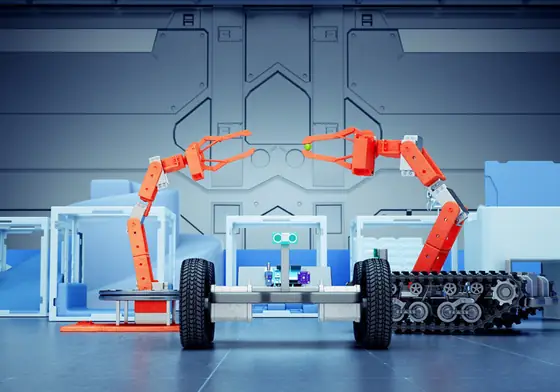
Robotics excites learners, but physical kits are costly, need batteries and spare parts, and are often locked away for fear of damage. A virtual robot design lab gives every learner a chance to build.
What learners do
In the Robot design lab, learners:
- choose parts such as wheels, tracks, sensors and arms;
- assemble a robot;
- program it to follow a line, avoid obstacles or climb a ramp;
- test it on a course and improve the design.
They can also change the environment, such as light, temperature and even gravity, and see how their robot copes.
A four-lesson unit
- Explore: drive a ready-made robot and identify its parts.
- Design: build a robot for a simple task, such as following a line.
- Program: add sensor rules and loops.
- Compete: teams race on a course and explain their design choices.
Skills learners build
- engineering design: plan, build, test, improve;
- coding and logic;
- teamwork and presentation;
- persistence when things fail.
Moving to real hardware
Once learners understand design and programming, real kits become far more useful. Schools near Nairobi can bring learners to the VR Labs Africa IoT Lab at Ramco Courts, South C, to work with real sensors and microcontrollers.
Tournaments
VR Labs runs international robot-design tournaments on the platform. A school club that practises regularly can prepare teams to compete.
Create a free account and try the Robot design lab.